Testing in the USA
For instance, a person living in a residence with a radon level of 4.0 pCi/L or lower has a roughly 7 in 1000 chance of getting ill. On the other hand, a person living in a home with a radon degree of 20 pCi/L or higher has a 36 in 1000 chance of contracting lung cancer cells. The World Health Organization (WHO) developed an activity degree of 2.7 pCi/L based upon a three-year worldwide study by more than 30 popular researchers. Radon is a radioactive gas released from the normal decay of the aspects uranium, thorium, as well as radium in rocks and dirt. It is an undetectable, unsmelling, tasteless gas that permeates up through the ground as well as diffuses right into the air.
So, as the second leading source of lung cancer cells only to smoking cigarettes, radon postures a huge danger to property owners, and also the scary thing is, it's unnoticeable. Unlike smoking, where most everybody knows the dangers and also you can feel the smoke and also see entering into your lungs, radon can not be scented, seen, or tasted.
Does http://improvingyourhome28495.blogstival.com/11699175/examine-this-report-on-radon-removal a radon mitigation system hurt resale?
Having an active Radon mitigation system in one's house does not adversely affect the home's resale value and since Radon is so easily controlled once it's detected it is no reason not to buy the property if all other factors line up favorably for buying the house.

Given that it is generally a gas, it might perhaps seep approximately the surface area via cracks in the planet. It is a naturally-occurring gas that can penetrate your home as well as create major healthy and balanced dangers to the whole household. To efficiently be particular you're risk-free from radon, effort to combine the insulation with a frequent radon reduction system. Although radon is found in all type of buildings, we obtain most of our exposure once we go to home. Radon mitigation systems are implied to be reliable systems that minimize the danger of radon access into your house.
- It results as part of the contaminated decay chain of uranium as well as thorium in the planet's crust.
- In the United States, the EPA recommends that rehabilitative activity be taken if the degree in the air is located to be above 4 picocuries per liter (pCi/L).
- Radon is a colorless, odor-free contaminated gas that exists in trace quantities in the environment.
- One of the most usual option is to established a radon reduction system consisting of a vent pipe and also blower to pull air from under the slab under your home as well as exhaust it outside.
- The issue is that it can leak up from the ground as well as collect in structures; there is clear evidence that breathing air with high concentrations of radon gas can trigger lung cancer cells.
Do radon mitigation systems really work?
The Surgeon General and the EPA recommend testing for radon and reducing radon in homes that have high levels. Fix your home if your radon level is confirmed to be 4 picocuries per liter (pCi/L) or higher. Radon reduction systems work. Some radon reduction systems https://drive.google.com/file/d/1_3x3D5-rJiXqwDdWbGCufP7JNEziFXUB/view?usp=sharing can reduce radon levels in your home by up to 99%.
Radon is an anemic, odor-free radioactive gas that is present in trace quantities in the atmosphere. It results as part of the radioactive degeneration chain of uranium as well as thorium in the earth's crust. The problem is that it can leak up from the ground and gather in structures; there is clear evidence that breathing air with high focus of radon gas can cause lung cancer. It is very recommended that, in locations that are recognized to have elevated Radon levels in the soil, any residences be evaluated for interior Radon levels.
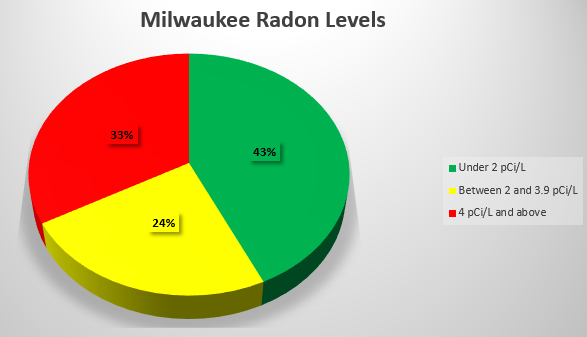
What is involved in radon mitigation?
Mitigation of radon in the air is accomplished through ventilation, either collected below a concrete floor slab or a membrane on the ground, or by increasing the air changes per hour in the building. Treatment systems using aeration or activated charcoal are available to remove radon from domestic water supplies.
This does not imply that a degree below 4.0 pCi/L is considered acceptable, as mentioned in the BEIR VI research. It is approximated that a reduction of radon levels to listed below 2 pCi/L across the country would likely minimize the yearly lung cancer cells deaths credited to radon by 50%. Nonetheless, despite having an activity level of 2.0 pCi/L, the cancer cells threat presented by radon gas is still numerous times greater than the risks permitted carcinogens in our food and also water.